Devlog 007 / Garage
Building a car, not a stat sheet
August 28, 2026
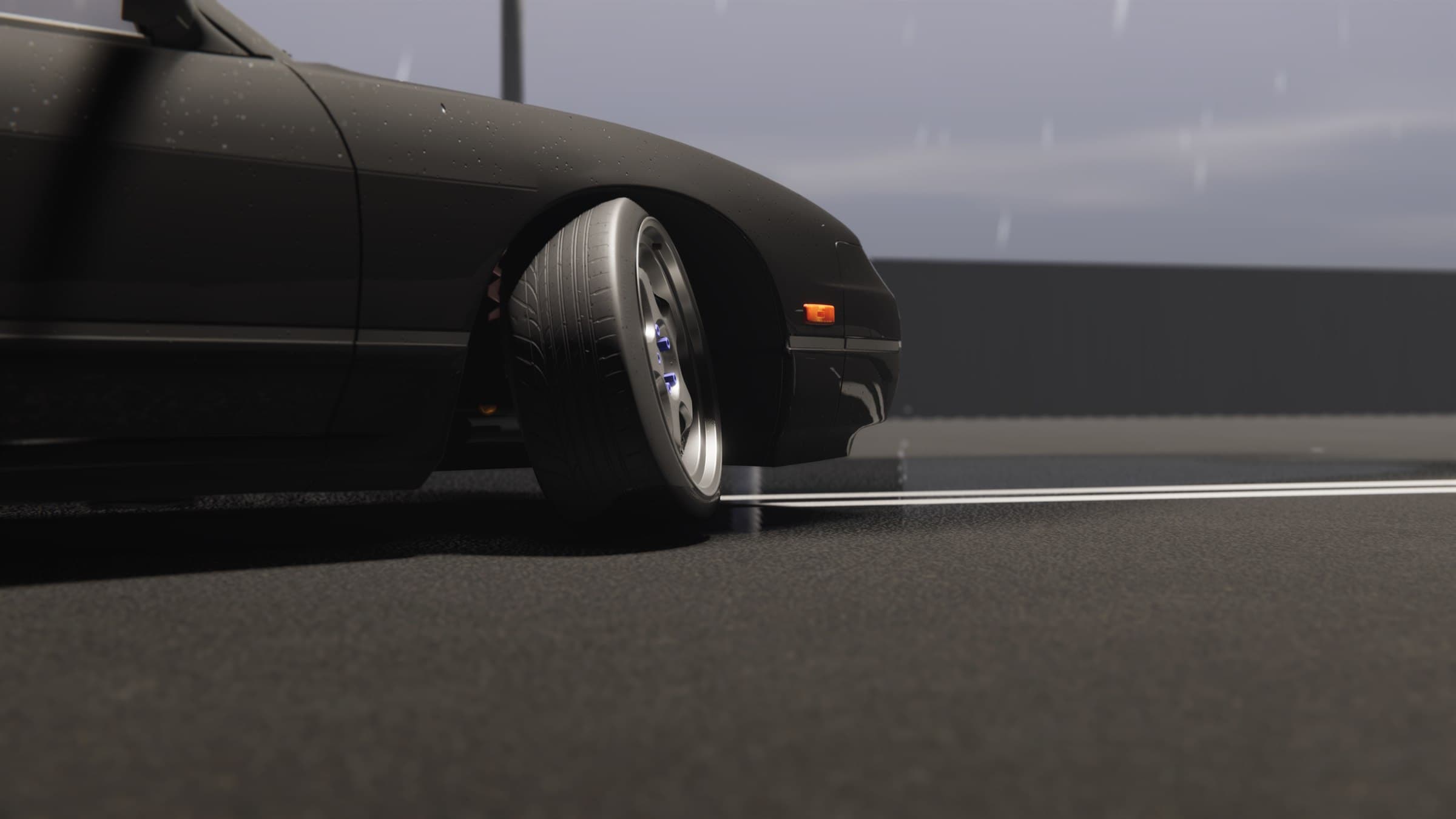
Building a car in Project Tourge is not a matter of filling a performance bar. An upgrade changes a real part of the simulated vehicle, and tuning decides how the installed parts are set up. More power can make a car harder to launch. A shorter final drive can improve acceleration while taking away speed at the top of a gear. A suspension setup that feels sharp on smooth asphalt can lose compliance on a rough road.
The intention is to let two cars with similar peak numbers drive very differently because of the choices underneath them.
Hardware first, adjustment second
The upgrade and tuning systems are connected, but they are not interchangeable. Hardware establishes what the car can do and which adjustments are available. The tuning panel then works within the limits of the fitted equipment.
Installing adjustable suspension, for example, changes the available spring, damper, travel and ride-height setup. Adjustable arms open alignment range. An LSD provides preload and acceleration/deceleration locking controls that an open or welded differential does not have. Higher ECU hardware unlocks deeper engine calibration, while the installed turbo still defines the basic boost and spool capability.
This prevents the tuning screen from becoming a list of unrestricted magic numbers. A player cannot create the effect of a part that is not on the car, and a tune cannot turn one piece of hardware into a completely different one.
Upgrades change the shape of the car
Engine upgrades do more than multiply peak power. Their effects can be distributed across the low, middle and high parts of the rev range, as well as engine inertia and the rev limit. A more aggressive camshaft can trade low-speed torque for stronger top-end performance. A lighter rotating assembly can make the engine gain and lose RPM more quickly without pretending that the car gained the same amount of torque everywhere.
Supporting parts and compatibility matter. Upgrade definitions can require the correct engine, aspiration type, ECU stage, intake, exhaust, fuel system or intercooler before they can be fitted. Staged parts replace the earlier version instead of stacking every stage on top of itself. The goal is a build with a mechanical relationship between its parts, not a shopping list where every purchase always adds another percentage.
The drivetrain carries those changes into the road. Clutch hardware affects torque capacity, engagement character and rotating mass. A transmission defines its gear set and shift behavior. Differential options include open, welded, helical and limited-slip layouts, while drivetrain conversions can change which axle receives power. These are not cosmetic labels: they alter how torque reaches the tyres and how the car behaves when power is applied or removed.
Weight reduction changes the mass the chassis has to accelerate, brake and turn. Front and rear aerodynamic upgrades add their effect at their respective ends of the car, so balance matters as much as total downforce. Additional drag can also trade top speed for stability rather than offering a free improvement.
Tuning the way a car transfers load
The suspension is adjustable by axle. Front and rear spring rate, bump damping, rebound damping, travel and ride height can be set independently. Anti-roll stiffness and damping become available with the appropriate hardware.
Those controls affect different moments of a corner. Spring and anti-roll stiffness influence how load is distributed while the car is settled. Bump damping changes how quickly a wheel moves upward and how the chassis accepts an initial load transfer. Rebound controls how quickly the suspension extends and settles afterward. Travel determines how much movement is available before the suspension reaches its limit; ride height changes the car's position without being used as a fake substitute for available travel.
That distinction creates consequences. A very low car with insufficient travel can spend more time on its suspension limits and become nervous over uneven roads. Excessive damping may feel controlled in a slow garage test but stop the tyres following a broken surface. A stiff front relative to the rear does not have the same effect as making both axles equally stiff.
Alignment reaches further than appearance. Front and rear camber, toe and wheel offset are adjustable when the fitted arms permit it. The front also exposes caster, steering-axis inclination and scrub radius. These settings change the relationship between the tyre, steering axis and road: turn-in response, straight-line stability, self-centring, contact-patch loading and steering torque can all move with the setup.
Tyre pressure is split front and rear as well. Lower pressure can improve longitudinal traction, but it softens lateral response and increases deformation and rolling resistance. The useful setting depends on the tyre, axle load and what the driver asks the car to do.
Ratios, locking and braking balance
Every forward gear can be tuned individually, alongside reverse and final drive. Shortening a ratio increases wheel torque and acceleration in that gear but reaches the rev limit sooner. A taller ratio extends the gear and can improve usable top speed, at the cost of acceleration. The right result is a connected set of ratios that keeps the engine in the useful part of its power band.
Limited-slip differentials expose preload, acceleration locking, deceleration locking and a maximum locking-torque cap. More acceleration lock can make power delivery more stable, but too much can push the car wide under throttle. Deceleration lock changes how freely the car rotates on lift-off and entry. Preload determines how connected the axle feels before a large drive or coast torque arrives.
Brake torque, front-to-rear balance, handbrake torque and ABS intervention can also be adjusted. Moving brake balance forward generally adds stability; moving it rearward can help rotation but gives the rear tyres more work under braking. As with the rest of the tuning system, the best number is the one that fits the car and driver rather than the largest value on the slider.
ECU calibration, not a power slider
With the required ECU hardware, fuel and ignition are editable as maps rather than one global setting. The current workspace divides the rev range into seven points across four load bands: cruise, part throttle, full throttle and boost. That produces separate cells for air-fuel ratio and ignition timing at the operating conditions the engine actually passes through.
Richer or leaner mixtures change torque and knock margin. Ignition advance can add torque toward the engine's useful timing point, but continuing past it introduces knock rather than free power. The tuning interface provides a torque-and-power preview, yet the calibration still has to work across the map instead of producing one attractive peak figure.
Boost tuning remains tied to hardware. A capable ECU allows a limited trim around the installed turbo's rated pressure and peak-boost RPM; it does not rewrite the turbo's underlying size or spool behavior. Per-gear boost control can reduce first- and second-gear pressure to trade a headline number for traction.
Customization — work in progress
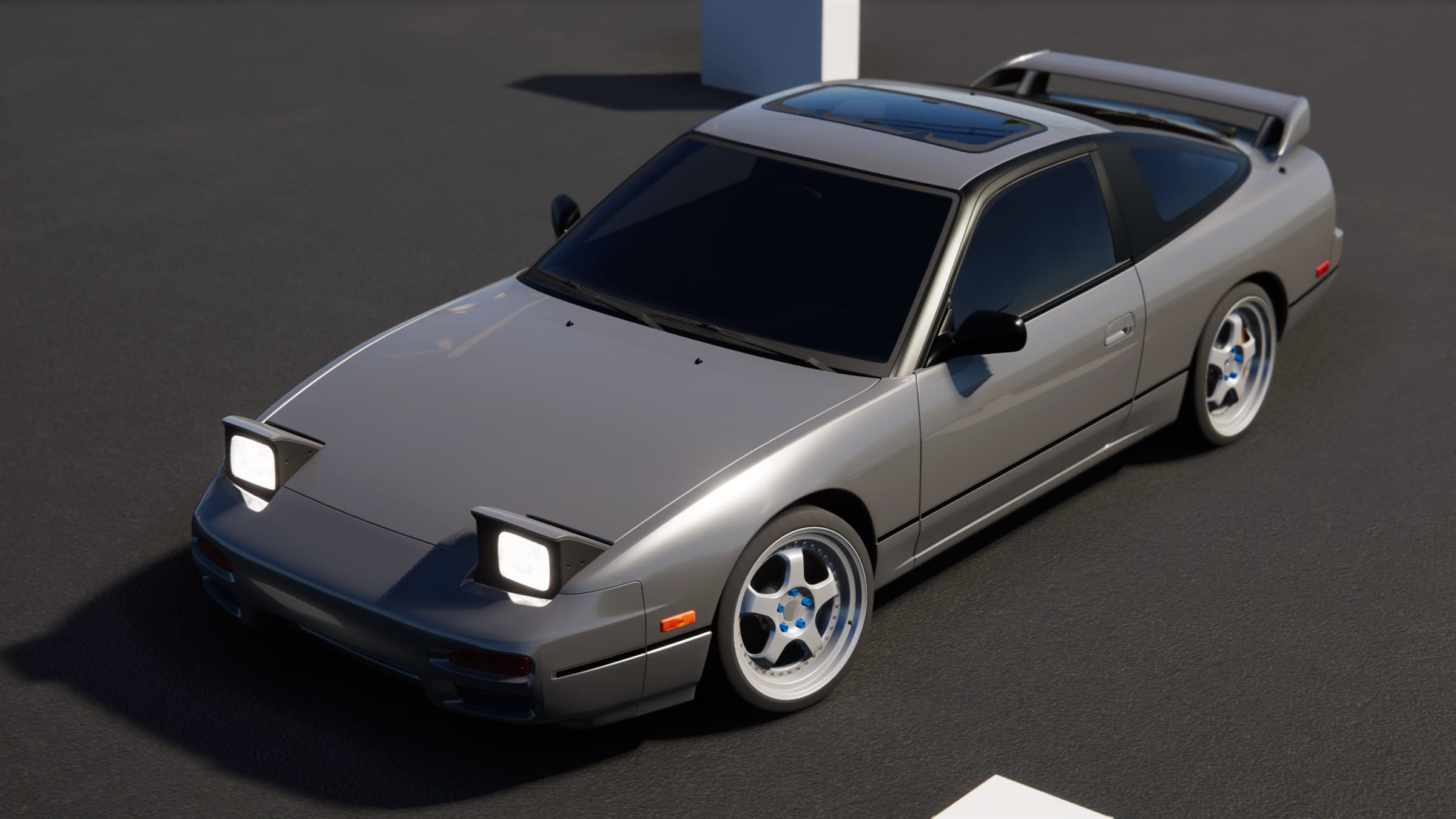
Customization is being developed as a separate, visual layer. The current work includes wheel designs, exhaust appearances and spoiler options, alongside body paint, accent paint, window tint and detailed finishes for wheels and visible suspension parts.
Body finishes currently cover gloss, metallic, pearl, matte, satin, chrome and candy treatments. Metallic and layered finishes expose their own material controls rather than applying the same color to a different label. Wheel finishes can target individual authored areas such as the main face, barrels, bolts, valve, hub and badge, while keeping the tyre material untouched.
The separation from upgrades is deliberate. A visual wheel swap does not silently change tyre width, rolling radius or inertia. A cosmetic exhaust does not add engine power. Performance changes belong to the upgrade system, where their effect is explicit; customization is for shaping the identity of the car.
This part of the garage remains work in progress, so its selection and presentation will continue to change. The foundation, however, is already clear: a car should be visually personal without hiding physics changes inside cosmetic choices.
The objective is not to build one maximum-stat car. It is to choose hardware, tune the compromises, and create a car whose behavior belongs to the decisions made in the garage.
Development archive