Devlog 001 / Project
Welcome to Project Tourge
August 28, 2026
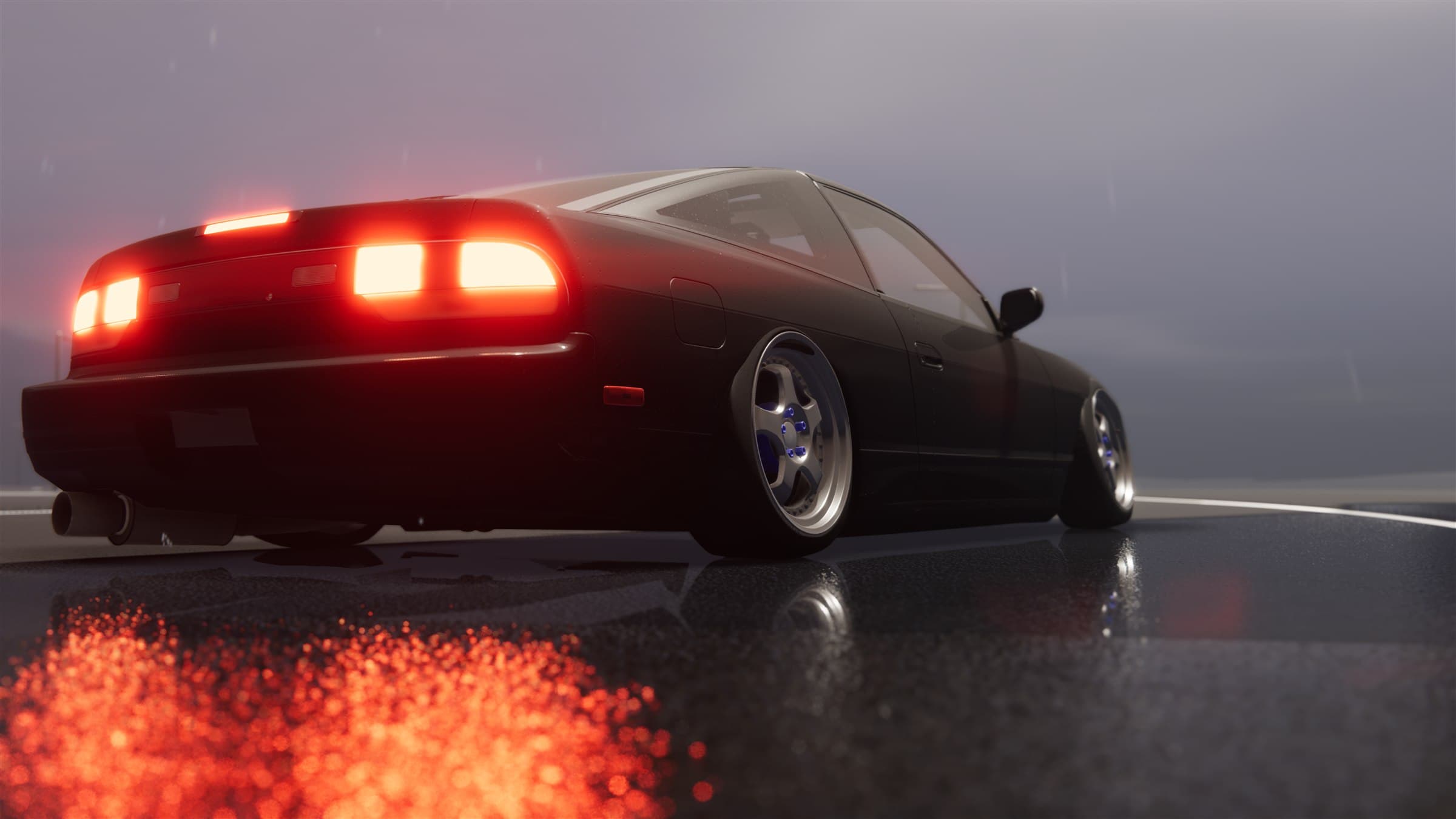
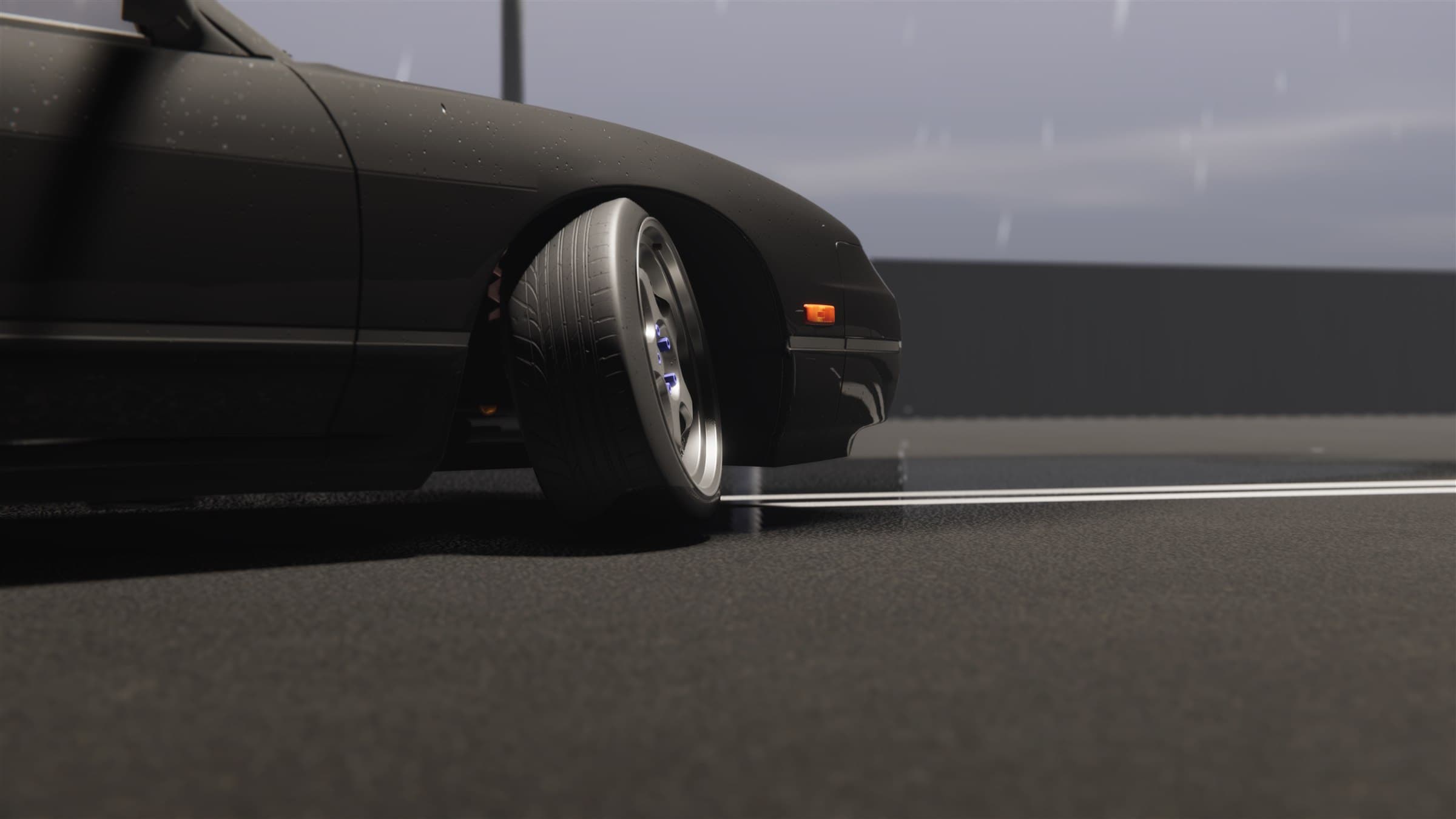
Project Tourge is a driving game built around the car itself: its mass, its tyres, the road underneath it, and the chain of forces connecting the driver to all four contact patches. The aim is not to make a car look convincing while hidden assists do the driving. The aim is to make the car's behaviour come from systems that agree with each other.
Physics first
Each car is assembled from working systems rather than one broad handling preset. Engine torque passes through the clutch, gearbox and differentials. Suspension load reaches each tyre. Tyre forces act back on the chassis at the contact patch. Weight transfer, wheelspin, braking, road surface and weather all change what the car can do.
That distinction matters. Grip is not a fixed number glued to a vehicle. A loaded tyre does not behave like an unloaded one, and a tyre being asked to brake and turn at the same time cannot give its maximum in both directions. The car has to resolve those competing demands continuously.
How fast the simulation runs
The current chassis simulation runs at 100 Hz: one fixed physics update every 10 milliseconds. Inside each of those updates, the tyre and drivetrain solve is divided into 10 substeps. That gives the fast-changing contact and rotational systems 1,000 smaller calculations per second while the chassis remains on a stable fixed clock.
Rendering can speed up or slow down without rewriting the physics. Inputs, suspension loads and tyre slip still meet on the same fixed timeline.
Accuracy with a purpose
Project Tourge models the parts of vehicle dynamics that materially change what the driver feels:
- Combined longitudinal and lateral tyre demand
- Load-sensitive grip and tyre self-aligning torque
- Suspension spring, damper and anti-roll response
- Mechanical drivetrain inertia from the engine to the driven wheels
- Differential behaviour, braking and engine braking
- Aerodynamic drag and downforce
- Surface-dependent grip, bumps and wet-road effects
- Steering forces that respond to the front tyres
This is still a game, not a laboratory instrument. Accuracy means preserving the right relationships and consequences, then presenting them clearly enough to drive. When a tyre saturates or the car transfers its weight, the response should come from the same forces already moving the chassis rather than a canned animation added afterward.
The car is the experience. Every system exists to make its behaviour understandable through driving.
Development archive