Devlog 005 / Audio
Building the engine audio system
August 28, 2026
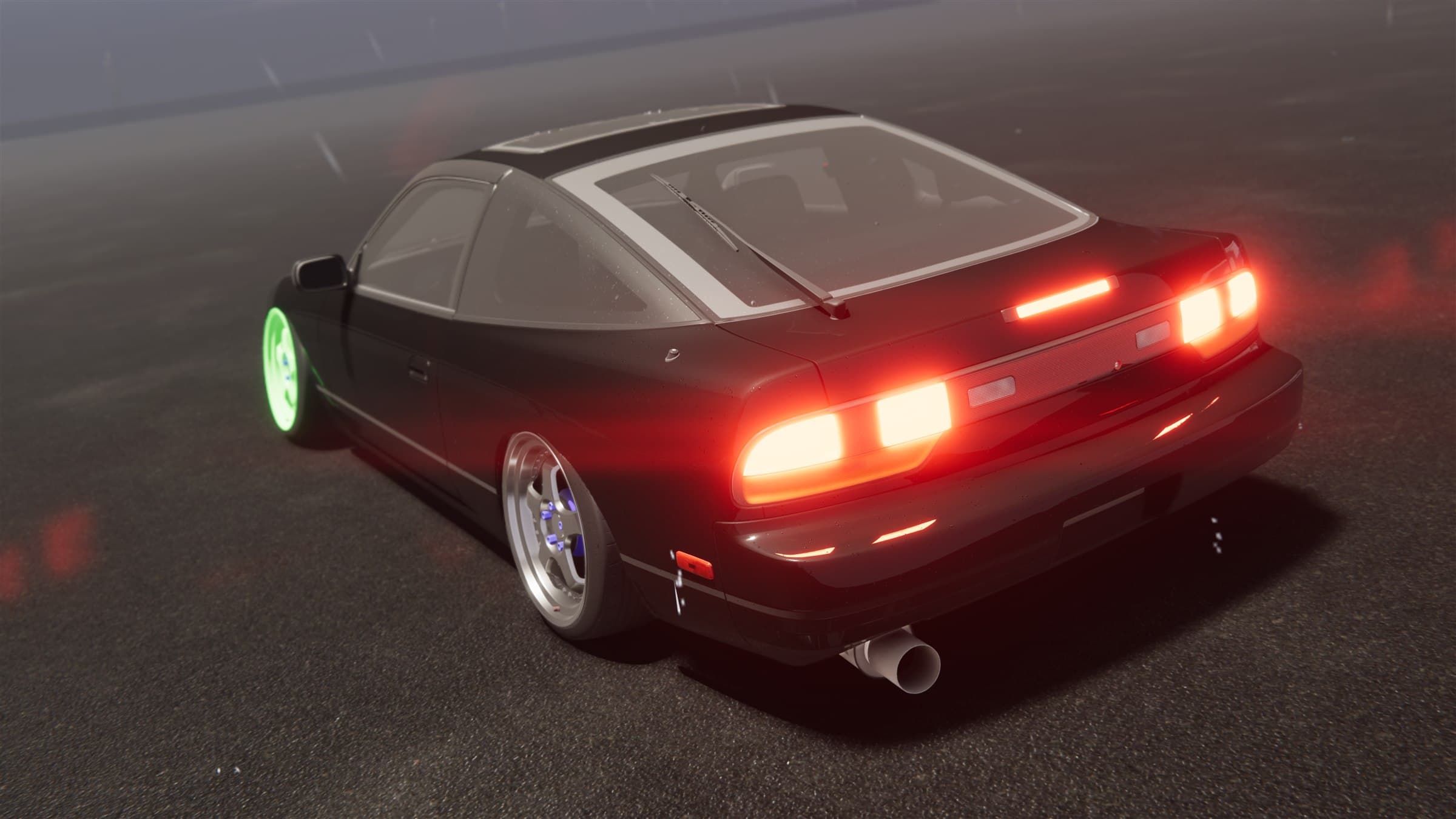
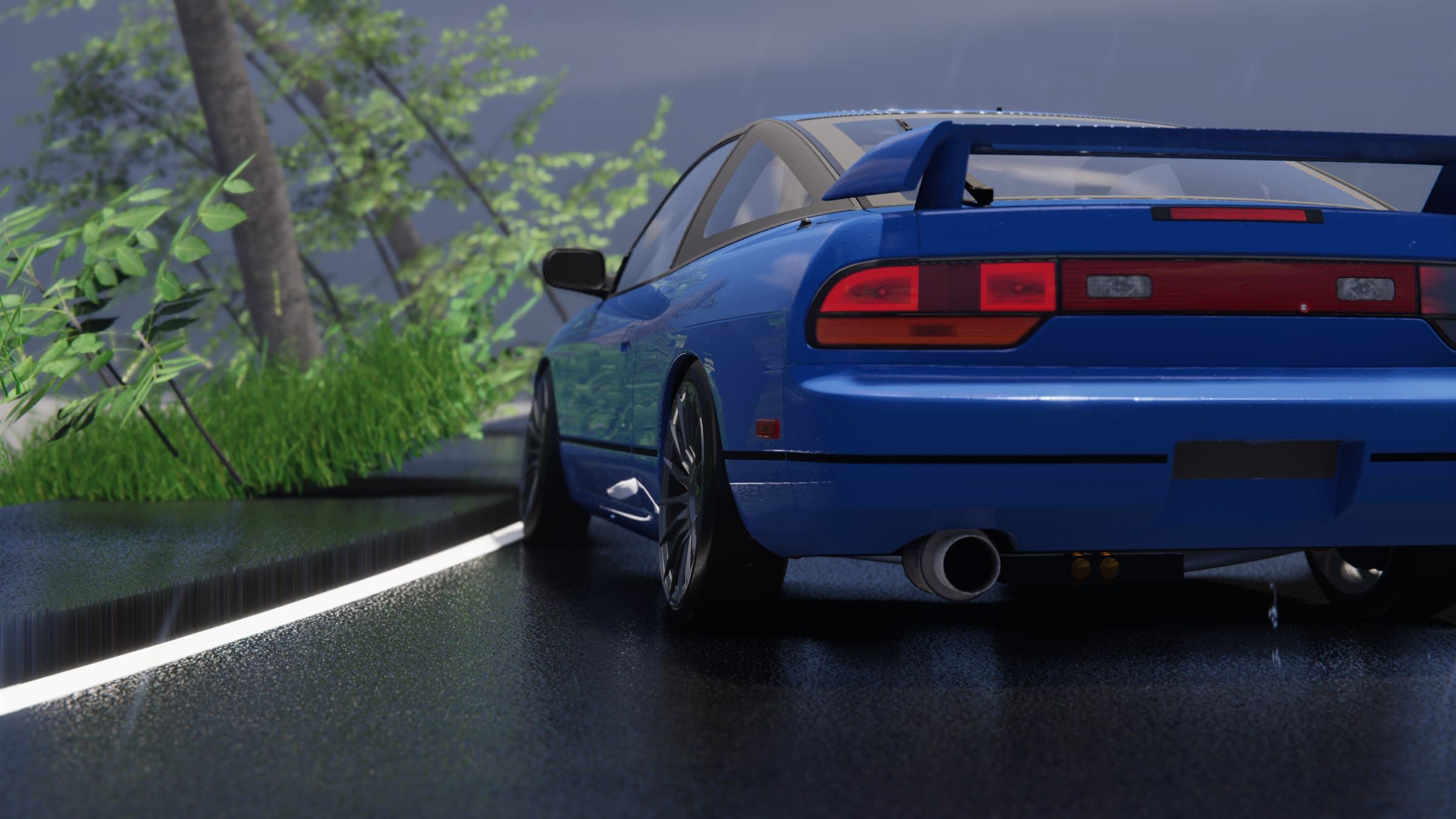
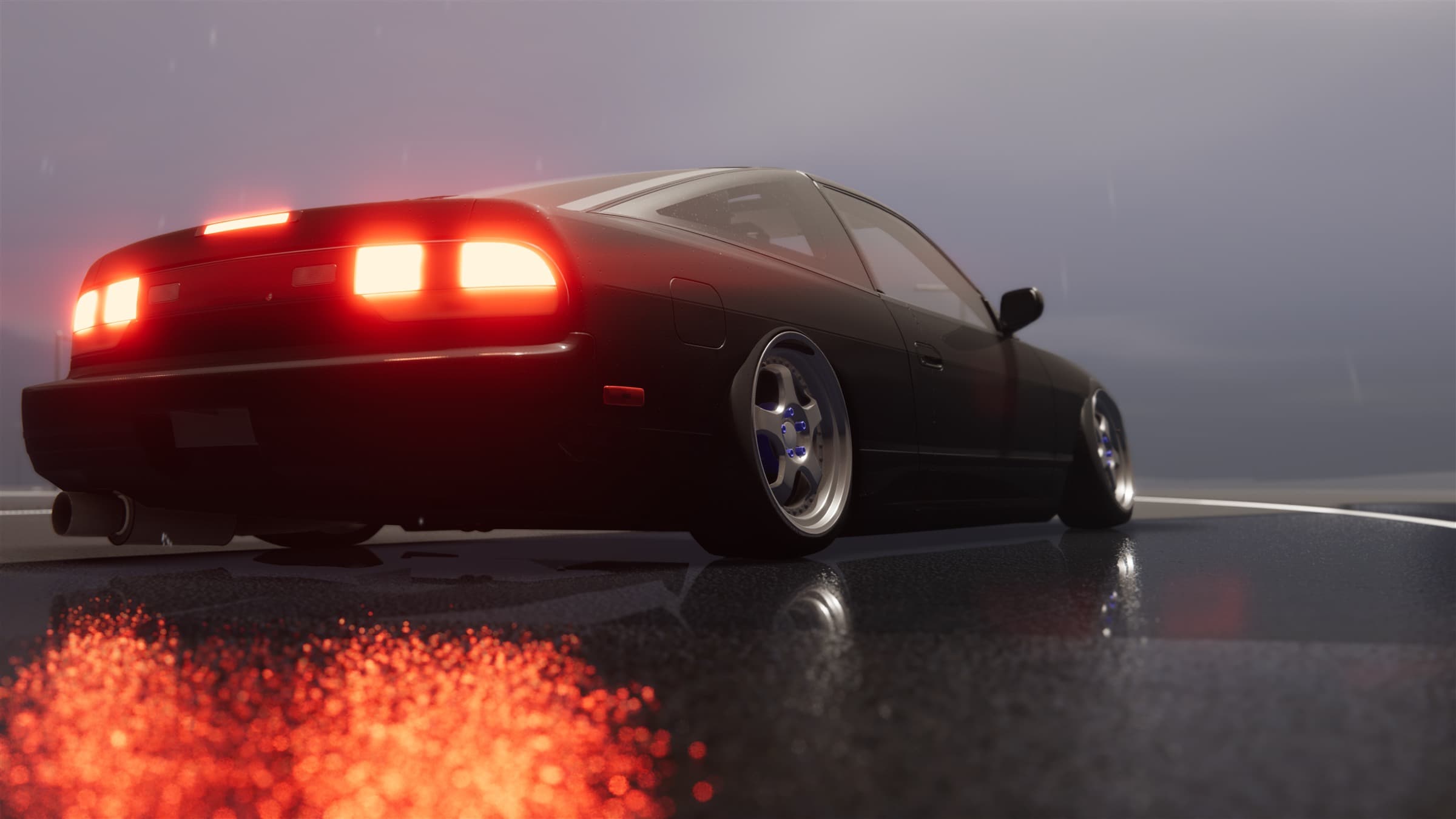
A car communicates before the driver looks at a gauge. The idle tells you whether the engine is settled. The note hardens as load arrives, breaks during a shift, turns hollow on lift-off and changes again when the exhaust meets a wall or tunnel. In Project Tourge, those changes come from the same live engine state that drives the car.
More than an RPM-pitched loop
A single recording can be made to follow engine speed by changing its pitch, but the result quickly becomes synthetic. Real engines do not simply play the same sound faster. Their intake, combustion and exhaust character changes across the rev range, and an engine under load does not sound like one coasting at the same RPM.
Project Tourge can build an engine voice from banks of recordings captured at known engine speeds. Neighbouring samples overlap and crossfade as RPM moves between them, keeping the engine continuous instead of jumping from one clip to the next. Separate load banks let the sound move between acceleration, steady running and lift-off character without disconnecting from the current RPM.
Each recording is level-matched before it enters the mix. That matters because a louder source sample should not create a false surge in engine output when the system crosses its RPM point. The original character remains, but the transition is controlled by engine speed and load rather than inconsistent recording volume.
The physics drives the performance
The audio system reads the engine rather than trying to predict it. RPM sets the operating point across the sample bank. Throttle and engine load shape the loaded and unloaded layers. The engine's running state, fuel cut, rev limiter and shift state all affect what reaches the mix.
That gives important moments a physical cause:
- A gear change briefly cuts and unsettles the engine note instead of merely lowering its volume.
- Lift-off retains a short load tail before moving into the unloaded recordings.
- The rev limiter follows the engine's actual fuel-cut pulses.
- Intake transients respond to fast throttle movement rather than playing on a fixed timer.
- Engines with a second cam profile can blend into a distinct high-RPM layer as the cam change occurs.
- Engine knock is synthesized from the live knock event and its severity, so a bad tune has an audible consequence.
Pitch and volume changes are damped at different rates. Load can attack quickly when the throttle opens and release more slowly when it closes. This keeps the car responsive without making every pedal movement sound like an abrupt edit.
Intake, exhaust and forced induction
Engine sound is divided spatially as well as mechanically. Intake and engine layers originate with the engine, while exhaust sample banks live at the tailpipe. The exhaust has its own loaded and lift-off recordings, distance falloff and Doppler response. Changing the physical exhaust can also change its acoustic profile through volume, pitch and filtering without altering engine performance.
Forced induction is another live layer. Turbo pressure, spool state and throttle movement control whistle, airflow, compressor flutter, wastegate character and blow-off behavior. A supercharger follows its own continuous whine. These sounds are procedurally generated from the state of the installed system, which lets them respond continuously instead of selecting from a small set of canned effects.
Anti-lag is event-driven. Its exhaust crack is only produced when a real afterfire event occurs while the turbo is genuinely anti-lagging. Each event varies its transient, body and decay so a burst does not turn into a metronomic repeating sample. Ordinary overrun pops remain separate from the anti-lag system.
The installed parts are audible
Changing the build changes more than the car's power curve. Because the audio system follows the live mechanical state, parts that alter rev limit, rotating inertia, boost response or the shape of the power band also change how quickly the note rises, where it spends time and how it responds when the driver lifts. A lighter rotating assembly sounds more eager because the simulated engine gains and loses RPM more quickly; a different turbo changes when spool becomes audible because its pressure and shaft behavior arrive at a different point in the rev range.
Some parts also carry a direct acoustic character. Intake hardware can move induction from the smoother, quieter character of a stock airbox toward a louder and raspier open intake. Turbo hardware identifies the size of the compressor, allowing a large single to sound deeper and slower than a pair of smaller, brighter turbos. Bearing cartridges can change the whistle character, while the fitted blow-off valve, internal or external wastegate and flutter hardware decide how the system releases and controls pressure. A supercharger uses its own pulley-dependent pitch and rotor harshness instead of borrowing the turbo sound.
Exhaust options have individual sound profiles as well. Fitting a different physical exhaust can change loudness and pitch, remove or retain low and high frequencies, add saturation, and introduce a restrained metallic width. This lets one exhaust sound deep and muffled while another is thinner, sharper or more aggressive, even though both are still being driven by the same engine events at the tailpipe.
The visual exhaust choice and its acoustic profile do not secretly change engine performance. Power-producing exhaust upgrades remain part of the upgrade system, where their mechanical effect is explicit. The sound profile describes the voice of the fitted exhaust, while the engine simulation decides what is being sent through it.
Combustion-related parts can change the events themselves. Cam, exhaust and anti-lag configurations can alter the probability and duration of lift-off afterfire, the RPM range where it can occur and the strength of an anti-lag burst. Those pops and cracks are therefore consequences of the installed build and current engine state, not a generic sound pasted over every car.
The world changes the sound
The same car should not sound identical on an open road, between buildings and inside a tunnel. Project Tourge probes the collision geometry around the active car and classifies the acoustic space as open, urban, narrow street, underpass, tunnel, small interior or large interior.
The system uses the distance and arrangement of surrounding surfaces to shape reflection delay, late reverb and decay. A short enclosed room answers almost immediately. A tunnel or large interior returns a longer tail. Because the probe reads the physical world, the effect follows the space the car is actually occupying rather than relying on a reverb trigger placed by hand at every location.
Two-dimensional audio such as music and interface sounds is kept outside this process. The environment changes the car, not the entire mix.
One engine, one coherent signal
The mixer keeps the engine, intake, exhaust and forced-induction layers on distinct paths so each part can be balanced without flattening the car into one loud source. The layers still share the same underlying engine state, which keeps them synchronized through acceleration, shifts and lift-off.
The purpose of these layers is not noise for its own sake. They let the driver hear mechanical state: when the engine takes load, when boost is building, when a shift interrupts torque, and when the surrounding world starts reflecting the engine back at them.
Engine audio is part of the vehicle simulation's feedback. The sound should explain what the car is doing before the dashboard has to.
Development archive